
Madison, MS · Garage Door Service
Cold Snaps and Older Springs: A Madison-Specific Checklist
Madison homes built mostly 1973-2000 pair original torsion springs with occasional hard freezes. Here's what that combination actually breaks, and how to catch it early.
- Repairs & new doors
- Springs & openers
- Serving 6 nearby communities
What Local Conditions Do
Madison doesn't get the deep freeze that cracks foundations up north, but it doesn't need to. The climate here is mild with occasional freezes, and that swing matters more than steady cold ever would. A torsion spring that's lived its whole life at 60-90 degrees doesn't flex the same way when the temperature drops overnight into the 20s for a night or two. Metal contracts, lubricant stiffens, and a spring that was already near the end of its wind count can let go right then.
Most of the housing stock in this service area went up between 1973 and 2000, with a median build year around 1987. That means a lot of doors are running on springs and openers that are themselves 20 to 40 years old, installed before anyone was thinking about how a once-or-twice-a-winter cold snap would treat the hardware. The mix of an older spring and a rare but real freeze is the exact combination that produces the calls we get in January.
It isn't the cold by itself. It's cold hitting metal that's already fatigued from three decades of daily cycles. That's a Madison-specific problem, not a generic one - a town with newer housing stock or a harder winter sees a different failure pattern entirely.
What to Check
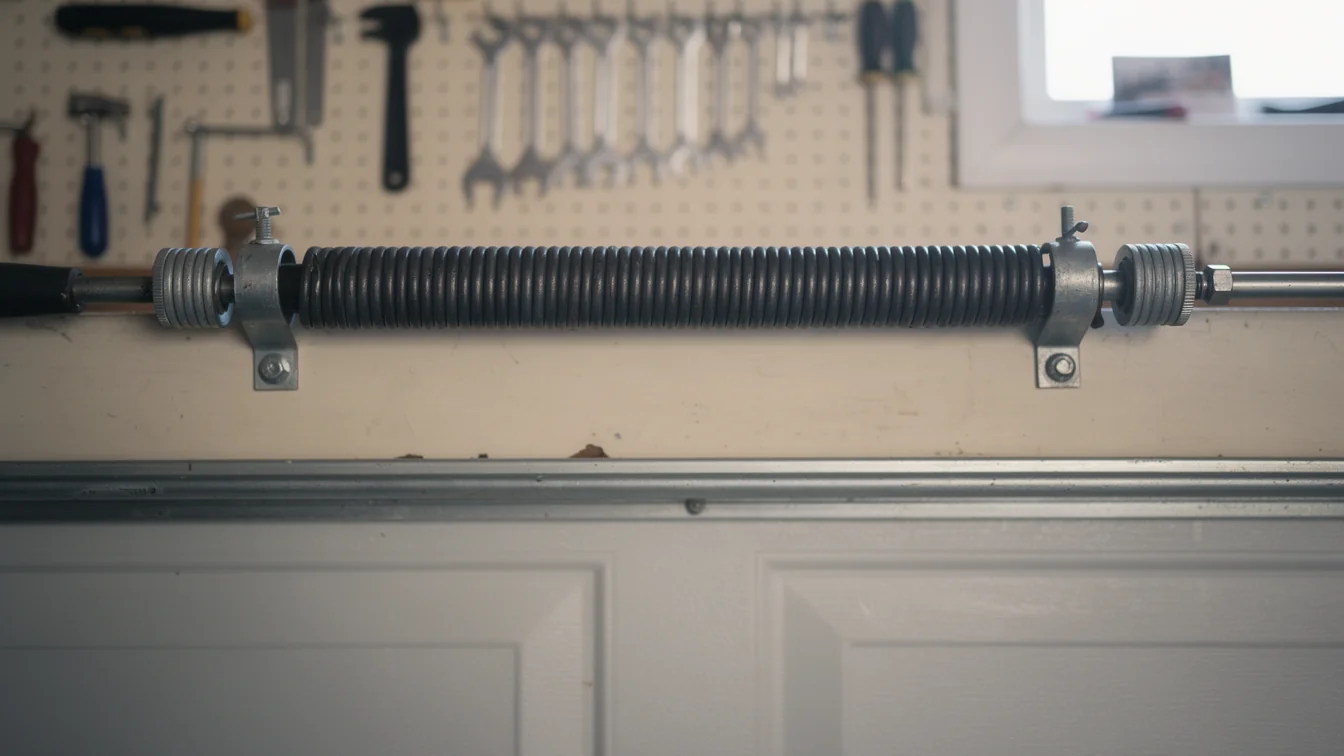
If your house falls into that 1973-2000 build window - and across the six main areas of town, most do - start with the spring itself. Look for a visible gap in the coil, a twist that doesn't look even side to side, or rust concentrated at one spot rather than spread evenly. Rust that's eaten into a specific coil is a cold-weather failure waiting for its night.
Next, check the cable where it wraps the drum. Older systems in this age range often still have the original cable, and a cable that's frayed even slightly will pick a cold morning to finally separate, because contracted metal has less give to absorb the jolt of the door moving.
Last, run the door by hand (disconnect the opener first) and feel for resistance partway up. A spring that's losing its temper gets harder to lift through, not easier, as it ages. That resistance is often the clearest sign you have before an actual snap.
None of this requires a tech visit to notice. It requires five minutes in the garage on a day under 60 degrees, since fatigue in a spring shows up more under thermal stress than at room temperature.
The Common Mistake
The mistake we see most in this age of housing is waiting for warm weather to deal with a spring that's already showing signs, on the logic that it survived the freeze so it's fine. It survived that freeze. A spring with visible fatigue from 30-plus years of cycling doesn't reset itself once the temperature climbs back into the 70s - it's just waiting for the next cold morning, and each one it survives, it survives by a smaller margin.
The second version of this mistake is lubricating a stiff spring and calling it fixed. Lubricant helps the coil move more freely in cold weather, but it doesn't add life back to metal that's fatigued. If the spring is actually near the end of its wind count, oil just delays the date it lets go, and sometimes makes the eventual failure happen with less warning.
We'd rather tell a homeowner the spring's got another year in it than swap one that's fine. That's the honest limitation here - we can't tell you exactly which cold morning a borderline spring will fail on, only that borderline springs in houses this age are the ones that do.
The Problem
Put the two facts together and the problem is simple: a service area built mostly in the 1980s and 90s, sitting in a climate that's mild most of the year but takes an occasional hard dip, means a lot of original or first-replacement springs are reaching the end of their working life right as the weather gives them a reason to quit. It's not a dramatic problem. It's a quiet one - a spring that's been fine for fifteen winters goes on the sixteenth, usually on the coldest morning of the stretch.
With roughly 16,465 owner-occupied houses across the area carrying that same housing-era profile, this isn't a rare combination. It's the baseline condition for a large share of garages around here. The fix isn't complicated - catch the fatigue before the freeze does - but it does mean checking the spring on its own schedule, not waiting for a problem to announce itself.
Frequently asked questions
Why does my spring only act up when it's cold?
Metal contracts and lubricant stiffens as temperatures drop, so a spring that's already fatigued from years of cycling has less flex to absorb the strain. In a climate like ours, where cold snaps are occasional rather than constant, that stress shows up suddenly rather than gradually.
My house was built in the 1980s - should I assume the spring is original?
Not necessarily, but it's worth checking. Houses from that era often got a first replacement spring sometime in the 2000s or 2010s, so the hardware's age can vary even within the same block. Visible gaps, uneven coils, or spot rust are better indicators than build year alone.
Is it worth replacing a spring before it actually breaks?
If it's showing fatigue signs - uneven winding, spot rust, harder lift resistance - yes, that's cheaper and safer than waiting for it to let go under load. If it's just old but shows none of those signs, there's no need to force a replacement early.
Related garage door services in Madison
More garage door guides
Book garage door service in Madison
Call now or request a quote - tell us what the door is doing and where you are.