
Madison, MS · Garage Door Service
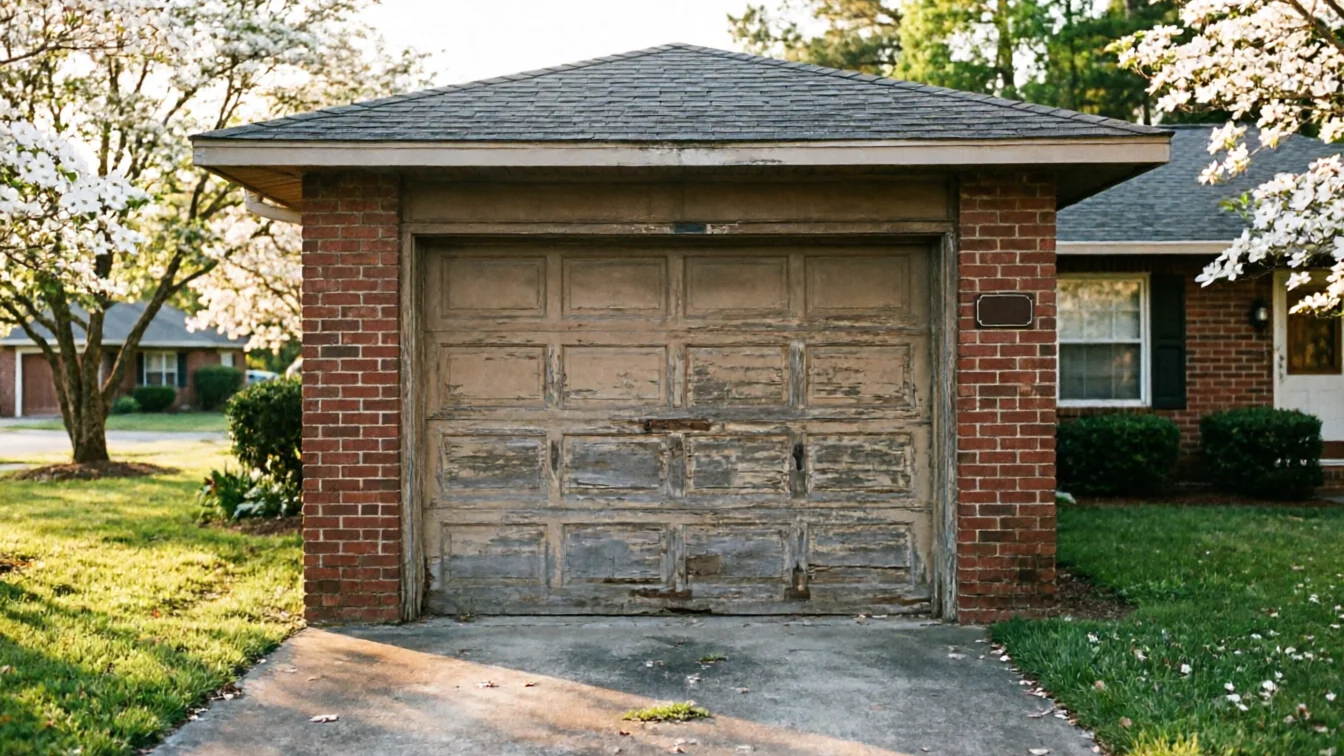
Garage Doors in Madison Age the Way the Houses Do
Madison, MS homes built mostly between 1973 and 2000 face specific wear on original garage door hardware. Here's what's actually worth fixing and what isn't.
- Repairs & new doors
- Springs & openers
- Serving 6 nearby communities
What Local Conditions Do
Madison's housing stock mostly went up between 1973 and 2000, with the median build year landing right around 1987. Walk through any of the six named areas of town built in this window and you'll find the same decade of construction repeating itself - same era of steel panel doors, same era of spring hardware, same era of opener motors that were up to date when they went in.
The climate band here is mild with occasional freezes, not the hard winters that crack seals and warp tracks further north. That's actually a break for this hardware. What wears a Madison garage door out isn't cold - it's thirty-plus years of daily cycling on springs and rollers that were never built to run two or three decades without service. Humidity does the rest, working rust into galvanized coatings on hinges, track bolts, and spring anchor brackets that have never once been pulled and regreased.
So the failure pattern here isn't dramatic. It's springs that finally give after four decades of use, hinges seized from rust nobody noticed, and openers from the 80s and 90s running on gear sets that have quietly outlived the warranty they came with by thirty years.
What to Check
Given a house built somewhere in the 1973-2000 window, here's what tends to actually fail, in rough order:
- Torsion springs - if your house dates to the 80s or 90s, the springs are almost never original. Look for a visible gap in the coil or a door that feels heavier on one side when you lift it by hand with the opener disconnected.
- Rollers and track - nylon rollers from this era were often the cheap builder-grade kind. Grinding or a door that jumps slightly at the same spot every cycle points here.
- Hinges and fasteners - check for rust bleed at the hinge pins. Mild climate means slower rust, but thirty-plus years still adds up, especially on the bottom panel hinges that catch the most moisture.
- Opener gear kit - a motor that runs but the door doesn't move usually means a stripped gear, a known wear point on openers old enough to have been installed when the house was new.
None of this is exotic. It's just what thirty to fifty years of cycling does to parts that were sized for a shorter service life than the house has had.
The Common Mistake
The mistake we see most in the older sections of Madison is homeowners treating the door panel and the hardware as one decision. They replace a whole door because one panel got dented, when the panel is cosmetic and the spring underneath is the thing actually failing. Or they go the other way - they get a new spring put on and assume the job is done, without anyone checking whether the rollers and hinges from that same 1980s install are about to go too.
A door built when the house went up, somewhere between 1973 and 2000, is a system where every part aged on the same clock. If the spring is original, the rollers almost always are too, and the hinges and cable are right behind them. Fixing one part in isolation on a door this old just moves the next service call up by a year or two instead of solving it.
The other version of this mistake is cosmetic: repainting or refinishing an old steel panel because the color's faded, and calling that a repair. It isn't. It's a paint job, and it doesn't touch whatever's actually wearing out underneath.
The Problem
Here's the real decision point on a door this old: is the panel structurally sound, or is it just the hardware that's worn? Steel panels from the 1973-2000 era generally hold up fine mechanically even after forty years, as long as they haven't rusted through or been hit. If the panel's straight and the steel's intact, replacing springs, rollers, cable, and hinges is almost always cheaper than a new door, and it gets you another long stretch of service out of hardware built for exactly this kind of use.
Where it tips toward replacement is insulation and efficiency. Doors from this build window typically have thin or no insulation by current standards, and if you're trying to keep a garage usable as living space or workshop, that's a real limitation of the original door - not something a hardware fix solves.
One honest limit on our end: we don't repaint or refinish steel panels. If the finish is the only thing bothering you and the hardware's fine, that's a cosmetic job, and it's outside what we do.
Frequently asked questions
How old does a garage door have to be before replacing it beats repairing it?
It depends more on the hardware than the calendar. A door from Madison's typical 1973-2000 build window with a sound, unrusted panel is usually worth fixing - new springs, rollers, and cable cost far less than a replacement door. It tips toward replacement when the panel itself has rusted through or you need real insulation the original door never had.
Does Madison's mild climate mean less garage door maintenance?
Less, but not none. The mild-with-occasional-freeze climate here is gentler on seals and tracks than a true cold-winter area, so you won't see the same seal cracking. But humidity still works rust into hinges and spring brackets over thirty-plus years, so hardware checks still matter even without hard freezes.
Do you work outside Madison itself?
We cover the surrounding area too, including Flowood and Greenbrook close in, and out to Canton, Flora, Clinton, Brandon, and Richland, all within about 5 to 17 miles of Madison and built on a similar mix of 1980s-90s housing stock.
Related garage door services in Madison
More garage door guides
Book garage door service in Madison
Call now or request a quote - tell us what the door is doing and where you are.