
Madison, MS · Garage Door Service
Openers, Power Outages, and the Doors Madison Actually Has
Madison homes built between 1973 and 2000 run openers that weren't made for today's outages. Here's what that means for your door and what to check before a storm.
- Repairs & new doors
- Springs & openers
- Serving 6 nearby communities
What Local Conditions Do
Most of Madison's housing went up between 1973 and 2000, with the bulk of it dating to the 1980s and 90s across the six main residential areas in town. That matters for openers specifically. A chain-drive opener from that era, even if it's been swapped out once already, was built on the assumption of a reliable grid and a door that gets opened by hand if the power drops. Madison sits in a mild climate with occasional freeze nights, which isn't the issue by itself - the issue is that mild climate means fewer homeowners ever think about their opener until a storm knocks the power out and the door won't budge. Older openers in this age bracket often lack any battery backup, and a good number were installed before battery backup was even a common option. When the power goes, the door does whatever position it was in when the lights cut, and if that's down, you're stuck until the grid comes back or someone pulls the manual release.
The practical result: a power outage isn't a hypothetical for a house built in this window, it's a known gap in a system that was never upgraded. Knowing where your release cord is and whether your opener runs on battery backup matters more here than in a newer subdivision.
What to Check
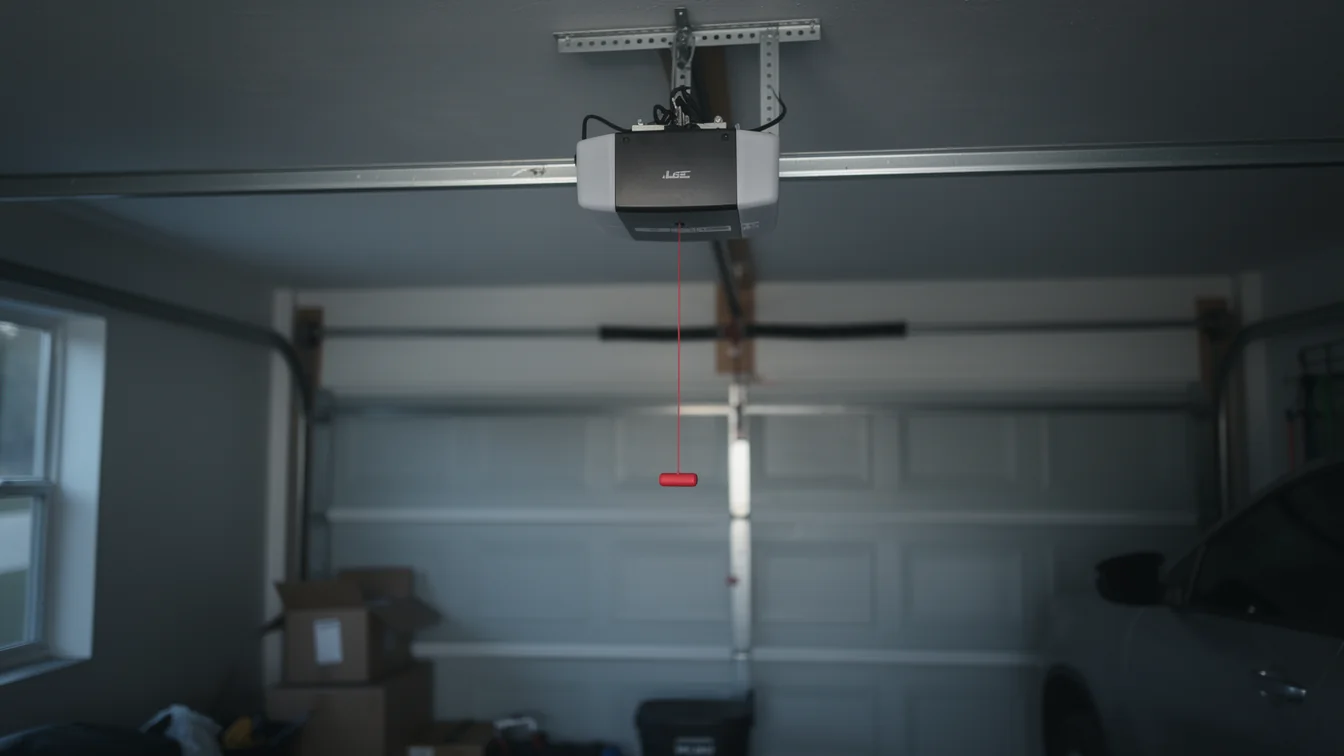
Find your manual release cord - the red handle hanging from the trolley on the rail. Pull it with the door closed, not open, or you risk the door dropping on its own weight if springs are weak. Check whether your opener has a battery backup unit; it's usually a separate box mounted next to or below the main opener head, often added later as a retrofit rather than built in. If your house falls in that 1973-2000 build window and you've never had the opener replaced, there's a decent chance it's original or close to it, and original units from that era rarely came with backup power at all.
Also look at your wall switch and safety sensors - the small eyes near the floor on each side of the track. Power outages followed by power coming back on can reset some older opener logic in odd ways, and a sensor knocked out of alignment during a blackout (kids, pets, a bumped ladder) will keep the door from closing even once power's restored. None of this is complicated to check. It's just rarely checked until the night the power's out and the door's down.
The Common Mistake
The mistake we see most in Madison is assuming a mild climate means the opener doesn't need attention. Because the area doesn't deal with the deep freeze-thaw cycles some regions get, homeowners treat the opener as a set-it-and-forget-it box. But age does the damage here, not weather extremes - an opener installed when a house was built in the 1980s is pushing toward end of service life on gears and circuit boards regardless of how mild the winters have been.
The second part of the mistake is waiting for a power outage to find out the backup battery is dead or missing. A battery backup unit that's never been tested is functionally the same as not having one. If you've got one installed, it needs a check now and then, not a discovery during the next outage.
The Problem
Here's the honest limitation: we can't retrofit battery backup onto every opener model, and on some of the oldest units from the 1970s and early 80s, the opener itself isn't worth saving once it fails - the gears, the logic board, and the lack of modern safety reversal all point to replacement rather than repair. We'll tell you straight if that's where your unit is rather than billing you for a patch job on something that's going to fail again in a year.
With 16,465 owner-occupied houses across the service area and median household income here around $67,262, most Madison homeowners are weighing a repair bill against a replacement cost on a door and opener system that's been quietly aging since the house was built. That's a reasonable thing to weigh. We just want the decision made with the actual age of your equipment in view, not a guess.
Frequently asked questions
Will my garage door opener work at all during a power outage?
Only if it has battery backup installed and charged, or if you use the manual release to disengage the trolley and lift the door by hand. Many openers original to houses built in the 1973-2000 window here don't have backup power at all, so the manual release is often the only option.
How do I know if my opener is original to the house?
Check the manufacture date on a sticker inside the opener housing, usually on the motor unit. If your home was built in the 1980s or 90s, which covers most of this area's housing stock, and that sticker matches, you're likely dealing with original or near-original equipment nearing the end of its working life.
Does Madison's climate affect opener reliability?
Less than age does. The mild climate with occasional freeze nights doesn't stress openers the way harsher climates do, but it also means issues get ignored longer since nothing forces a check. Age-related wear on gears and circuit boards happens regardless of winter severity.
Related garage door services in Madison
More garage door guides
Book garage door service in Madison
Call now or request a quote - tell us what the door is doing and where you are.